

Pros and Cons of Living in Portsmouth, NH An Honest Local Guide

Portsmouth, NH consistently ranks among New England’s most livable small cities — and the reasons are real. But so are the trade-offs. This guide covers both sides honestly, so you know what you’re getting into before you make the move.
The Pros of Living in Portsmouth, NH
1. A Genuinely Walkable, Historic Downtown
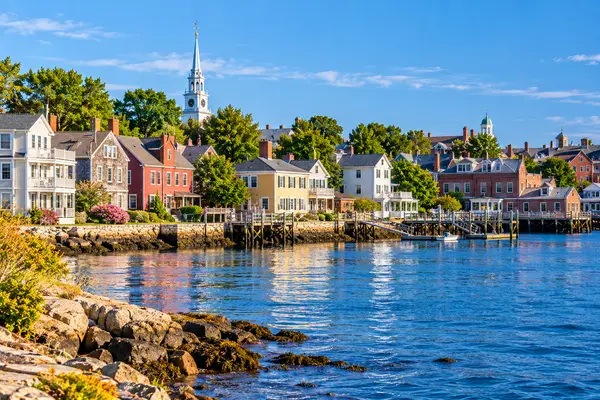
Portsmouth’s walkable historic downtown is one of a kind in New England. The Historic District encompasses over 1,200 historically significant buildings anchored near Market Square and the waterfront — filled with cafés, boutique shops, galleries, and cultural institutions. You can walk to dinner, catch live theater, browse independent bookstores, and stroll the harbor trail, all within a few blocks. For downsizers trading a large suburban home for a more connected lifestyle, or relocators who want city amenities without city congestion, this is a genuine quality-of-life advantage.
Community involvement is built into the fabric of daily life here, too. The Prescott Park Arts Festival — a beloved waterfront summer fixture — showcases music, dance, and theater, while the Portsmouth Symphony Orchestra, Portsmouth Music Hall, and Seacoast Repertory Theatre keep the cultural calendar full year-round.
The city’s Adopt-A-Spot program invites residents, neighborhood groups, and businesses to volunteer maintaining pocket parks, traffic islands, and green spaces — a low-barrier way to plug into the community from day one. Organizations like Gather — the Seacoast’s largest food assistance nonprofit, serving more than 10,000 residents monthly — reflect a civic culture where showing up for neighbors is genuinely the norm. New residents, whether buyers, downsizers, or relocators, consistently report that finding their community here happens organically and quickly.
2. Zero Sales Tax and Zero Income Tax
New Hampshire’s tax structure is a real financial advantage — especially for buyers moving from Massachusetts, Connecticut, or New York. There’s no state sales tax and no state income tax on wages, which adds up fast when you’re furnishing a new home, buying appliances, or sourcing materials for a renovation project. For first-time homebuyers stretching their budget and for investors calculating net returns on rental properties, this matters more than most people realize on day one.
Property taxes do apply (more on that below), but the absence of income and sales taxes meaningfully offsets the overall cost-of-living picture relative to neighboring states. For renovation-minded homeowners and contractors alike, every dollar saved on materials is a dollar that goes back into the project.
3. Strong, Top-Ranked Public Schools
Families consistently rank schools as a top priority, and Portsmouth delivers. The Portsmouth School District serves PK through grade 12, enrolling about 2,449 students with an 11:1 student-teacher ratio, and Niche ranks the district #4 of New Hampshire school districts (2025–26 cycle). Portsmouth High School ranks #4 of 85 NH public high schools on Niche’s 2025–26 list, and Portsmouth Christian Academy holds the #1 private school in NH ranking. For families relocating with school-age children, walkability adds a bonus: kids can independently navigate town, walk to the bagel shop, or bike to school — a freedom that resonates with parents leaving more car-dependent environments.
4. Proximity to Boston, Mountains, and the Maine Coast
| Destination | Approximate Drive Time |
|---|---|
| Boston, MA (downtown) | 1 hr – 1 hr 15 min |
| Portland, ME | ~1 hr |
| Durham / UNH | 20–30 min |
| Portsmouth Int’l Airport at Pease | 10–20 min |
| White Mountains (ski areas) | ~2 hrs |
Location is one of Portsmouth’s most underappreciated assets. You can ski the White Mountains in the morning, be on a Maine beach by afternoon, and catch a Red Sox game in the evening — all as a resident of a city with a population just over 22,000 (U.S. Census Bureau). For veterans and active-duty personnel, proximity to the Pease Tradeport and its veterans’ services infrastructure is an additional practical benefit.
5. A Crime Picture That Compares Favorably to National Averages
Portsmouth’s crime profile is worth understanding with nuance, because the data varies by source and methodology — and an honest guide shouldn’t cherry-pick. Here’s what the numbers actually show:
- BestPlaces.net: Violent crime index 12.2 vs. the U.S. average of 22.7 — well under the national benchmark.
- AreaVibes (2024 FBI data): Safer than 58% of U.S. cities; notes that as a small urban center, Portsmouth sees higher rates than many of New Hampshire’s smaller rural towns.
- CrimeGrade.org: B+ for violent crime safety, 76th percentile nationally — safer than roughly three-quarters of American cities.
The honest takeaway: Portsmouth is not New Hampshire’s sleepiest town, but it compares favorably to U.S. cities of similar size and character. For families, veterans, and downsizers evaluating where to put down roots, the city’s safety profile is a net positive relative to national norms — with the understanding that an active downtown and a tourist economy mean minor property crime fluctuates seasonally.
6. A Strong Real Estate Investment Case
Portsmouth’s constrained geography and persistent demand create favorable conditions for long-term investors and sellers alike. According to New Hampshire REALTORS®, the median sales price reached $1,200,000 in May 2025 — a 38.7% year-over-year rise — while the year-to-date median sits at $970,000, up 14.1%. Strong buyer demand, a desirable coastal location, and historic charm continue driving values upward.
| Period | Median Sale Price | YoY Change |
|---|---|---|
| YTD 2025 | $970,000 | +14.1% |
| May 2025 | $1,200,000 | +38.7% |
| December 2025 (Redfin) | $875,000 | +4.2% |
For sellers, this trajectory is excellent news. For buyers and long-term investors, it signals that even at premium price points, Portsmouth has historically rewarded patient ownership. If you’re evaluating Portsmouth NH neighborhoods for an investment purchase, partnering with a local agent who knows the inventory street by street makes a meaningful difference. You can search available Portsmouth listings here or reach out to Tim Cheney directly to discuss investment criteria before the right property moves.
The Cons of Living in Portsmouth, NH
1. The High Cost of Entry
This is the biggest barrier — and the one most buyers feel first. In December 2025, Portsmouth home prices were up 4.2% year-over-year, with a median sale price of $875K (Redfin). That’s well above the national median, and significantly above many comparable inland New Hampshire towns. First-time homebuyers in particular will need to budget carefully, consider adjacent communities like Dover, Exeter, or Greenland, or work with a knowledgeable agent to find value in a market where inventory stays tight.
Renters face similar pressure. According to Apartments.com, as of April 2025, the average rent in Portsmouth is $2,305/month — roughly 42% above the national average — with two-bedroom units averaging around $2,445. Downtown units command a further premium, and availability is limited, especially for larger families or those seeking modern amenities in historic buildings.
2. Property Taxes That Require Careful Budgeting
While the absence of state income and sales tax softens the blow, property taxes in Portsmouth are real and worth modeling before you make an offer. The current property tax rate is $11.51 per $1,000 of assessed valuation — labeled the “2025 tax rate” on the City of Portsmouth’s online tax calculator and approved by the NH Department of Revenue Administration in December 2025 as the FY2026 rate.
On a home with an assessed value of around $800,000 — note that assessed values are typically set below market price and vary by property; use the city’s online calculator for a precise estimate — that works out to approximately $9,208 per year in property taxes.
Always request the prior owner’s full tax history before closing and account for potential reassessments in your long-term cash flow.
For investors purchasing rental properties or planning renovations that increase assessed value, this is an especially critical line item when calculating net operating income.
3. Renovation Costs in an Older Housing Stock
Portsmouth’s historic colonial and federal-style homes are genuinely beautiful — wide-plank floors, 18th-century moldings, and irreplaceable craftsmanship. But older homes carry real cost implications for buyers and investors who plan to renovate. According to Rothrock Remodel’s 2025 NH pricing guide, a quality-grade kitchen remodel in the Seacoast region runs $90,000–$120,000, while a luxury build-out can exceed $200,000.
Here’s a quick reference for Portsmouth-area renovation benchmarks:
| Renovation Scope | Estimated Cost / ROI |
|---|---|
| Kitchen remodel (quality grade) | $90,000–$120,000 |
| Kitchen remodel (luxury) | $200,000+ |
| Minor kitchen remodel ROI | ~113% |
| Window replacement ROI | 70–75% |
| Permit fees (by scope) | $500–$3,000+ |
| ADU (detached, HB 577 2025) | Project-dependent |
New Hampshire’s 2025 renovation data shows a minor kitchen remodel returning 113% and window replacement at 70–75% — strong numbers for a coastal market with persistent demand. Investors considering accessory dwelling units should also note that New Hampshire enacted HB 577 in July 2025, significantly expanding homeowners’ rights to add detached ADUs in single-family zones. Before closing on any older property, get the prior owner’s full-year utility statements, verify insulation and HVAC systems, and budget for weatherization upgrades — the charm is real, but so is a drafty window in February.
4. Summer Tourism, Traffic, and Seasonal Congestion
Summer congestion in Portsmouth is a genuine trade-off for year-round residents. Downtown parking becomes a real challenge from Memorial Day through Labor Day, the population swells well beyond its year-round base, and long-time residents acknowledge that the seasonal surge becomes tiresome — particularly for those who chose Portsmouth for its intimate, small-city character.
The upside: fall and spring are, by many residents’ accounts, the best seasons to live here. Tourists thin out, all the restaurants stay open, and New England foliage season is spectacular. Sellers who time listings for late spring or early fall often find motivated buyers without the chaos of peak summer.
5. Limited Public Transportation
Portsmouth has very limited public transit within the city — available services primarily connect commuters to destinations outside the region, rather than moving residents around locally. Buyers coming from transit-rich metros like Boston, New York, or Washington, D.C. should factor this into their lifestyle planning. The city’s own planning consultants found that “limited public transit and biking options create challenges for existing residents and workers commuting into the city.” The downtown core is walkable enough that car dependence is significantly reduced for residents who live or work centrally — but if your commute takes you outside the walkable zone, a car is essential.
For veterans using VA loan benefits, factoring commute logistics into Portsmouth NH neighborhood selection — especially for roles at Pease or in the broader seacoast employment base — is worth a dedicated conversation with your agent.
6. Tight Inventory and a Competitive Rental Market
Portsmouth’s geographic constraints — coastal, historic, and compact — limit its ability to expand housing supply quickly. This dynamic works in sellers’ and long-term investors’ favor, but creates real friction for first-time buyers, downsizers on fixed incomes, or relocators working within a firm budget.
For buyers and renters: Supply remains tight, demand consistently outpaces inventory, and well-priced homes move fast. Relocators should budget above the regional median and be prepared to act decisively.
For investors and property managers: With renters occupying roughly 48% of Portsmouth housing units and vacancy rates remaining extremely low, re-leasing velocity is strong. That said, carefully model the $11.51/$1,000 tax rate when calculating net operating income, and budget proactively for maintenance on an aging housing stock — deferred repairs in a tight market are costly to catch up on.
Is Portsmouth, NH Worth It? The Bottom Line
Yes — with clear eyes. The pros and cons of living in Portsmouth, NH tell the story of a genuinely exceptional small city that commands a premium price for what it delivers:
- Walkable historic streets anchored by Market Square
- Top-ranked schools
- A violent crime index well below the U.S. average (BestPlaces.net)
- No income or sales tax
- A location that puts Boston, the Maine coast, and the White Mountains all within reach
Best fit for: Buyers who prioritize lifestyle, long-term appreciation, and community character over price-per-square-foot.
Not the right fit if: You need sub-$600K housing, rely on public transit, or prefer a quieter, less touristy environment.
The trade-offs — high home prices, property taxes, renovation costs in older homes, seasonal congestion, and limited transit — are real but manageable with the right financial planning and local guidance. Whether you’re exploring Portsmouth NH neighborhoods for the first time or narrowing down a shortlist, the key is going in with accurate numbers and an experienced agent who knows this market.
For a deeper look at what daily life looks like across all four seasons, visit our comprehensive resource: Living in Portsmouth, NH: A Year-Round Guide.
Frequently Asked Questions About Living in Portsmouth, NH
Is Portsmouth, NH a good area to live in?
Yes — Portsmouth consistently ranks among New Hampshire’s most desirable communities. Key highlights:
- Schools: District ranked #4 in NH by Niche (2025–26 cycle); Portsmouth High School #4 of 85 NH public high schools
- Safety: Violent crime index of 12.2 vs. the U.S. average of 22.7 (BestPlaces.net); safer than 58% of U.S. cities (AreaVibes, 2024 FBI data); B+ violent crime grade, 76th percentile nationally (CrimeGrade.org)
- Lifestyle: Vibrant walkable downtown, rich cultural scene, easy access to Boston and the Maine coast
- Taxes: No state income or sales tax
The main trade-off is a high cost of entry — median home prices range from the high six figures to over $1M depending on season and property type. For buyers, sellers, investors, and relocators who prioritize quality of life and long-term value, Portsmouth is a strong choice.
What are the biggest downsides of living in Portsmouth, NH?
The top cons are:
- Housing cost: Median sale prices at $875K (December 2025, Redfin) and $970K year-to-date through May 2025 (NH REALTORS®)
- Property taxes: Current rate of $11.51 per $1,000 of assessed valuation (labeled “2025 tax rate” by the city; approved as the FY2026 rate in December 2025) — translates to roughly $9,208/year on an $800,000 assessed value
- Renovation costs: Quality kitchen remodels run $90K–$120K in the Seacoast region (Rothrock Remodel, 2025)
- Limited public transit: Car-dependent outside the walkable downtown core
- Summer congestion: Tourist season creates real parking and crowd friction from Memorial Day through Labor Day
The absence of state income and sales taxes meaningfully offsets the overall cost picture relative to neighboring states.
How does Portsmouth, NH compare to nearby towns like Dover or Exeter for homebuyers?
Portsmouth offers the highest walkability, strongest cultural scene, and most vibrant downtown — but commands the highest prices. Dover and Exeter are frequently recommended as more affordable alternatives with easy access to Portsmouth’s amenities.
| Portsmouth | Dover | Exeter | |
|---|---|---|---|
| Drive to Portsmouth | — | 15–20 min | ~25 min |
| Downtown vibe | Historic, bustling | Growing, revitalized | Charming, quieter |
| Price point | Highest | Lower | Moderate |
| School highlight | #4 district in NH | Strong district | Phillips Exeter Academy |
For first-time homebuyers or budget-conscious relocators moving to Portsmouth, NH or its surrounding communities, Dover and Exeter are worth serious consideration.
Is Portsmouth, NH a good place for real estate investment?
Portsmouth has historically been a strong performer for real estate investors. Its constrained geography, persistent buyer demand, no state income or sales tax, and proximity to Boston have supported steady long-term appreciation. Key data points:
- Median sale price: $1,200,000 in May 2025 (+38.7% YoY); $970,000 YTD (+14.1%) — NH REALTORS®
- Average rent: ~$2,305–$2,445/month depending on unit size (Apartments.com, 2025)
- Vacancy rates: Extremely low, with strong re-leasing velocity
Investors should carefully model property taxes at $11.51/$1,000 and renovation costs on older homes, but the long-term fundamentals — high rental demand, desirable coastal location, and a walkable Portsmouth NH neighborhood — remain compelling.
What should veterans know about buying a home in Portsmouth, NH?
Portsmouth and the NH Seacoast are welcoming to veterans and active-duty personnel. The Pease Tradeport is nearby, healthcare infrastructure in the region is strong, and VA loan benefits apply to eligible properties throughout the area. The absence of state income tax is an additional benefit that stretches VA housing allowances further than in many other states. Veterans should work with a lender experienced in New Hampshire’s specific VA loan requirements and an agent who understands local inventory — in a fast-moving market, well-priced homes can move in days.
How active is the Portsmouth, NH community for new residents?
Very active. Portsmouth offers strong community involvement opportunities for residents at every stage of life:
- The Adopt-A-Spot program connects neighborhood groups and individuals with green-space stewardship across the city
- Gather serves over 10,000 Seacoast residents monthly and welcomes volunteers
- The Portsmouth Symphony Orchestra, Prescott Park Arts Festival, and dozens of cultural organizations host events that draw residents together year-round
Whether you’re a buyer, a downsizer, or a relocator new to Portsmouth, NH, plugging into the community here happens naturally and quickly.
Written by Tim Cheney | RE/MAX Shoreline
Thinking about buying, selling, investing, or relocating to Portsmouth, NH? Contact Tim Cheney at RE/MAX Shoreline for trusted local guidance on the NH Seacoast real estate market — from your first showing to a confident, smooth closing.
Categories
Recent Posts




VP of Seacoast Board of REALTORS NH 077699ME BA925726
+1(207) 200-3637 | tim@timcheneyrealtor.com